Home for the Holidaze 2: Making Gifting More Meaningful
In The Spirit of the Gift, Jay Hughes makes an important and relevant distinction between gifts and “transfers” in reference to giving gifts of money.
A gift, he explains, is delivered with explicit intention. The giver shares their hopes and dreams for the recipient’s life and for the opportunities they hope the money will help them access. It comes with context, with story, with meaning. With “spirit.”
A transfer? That’s when money just shows up in an account. No conversation. No context. Just… “here’s some money. Use it however.” Or “here’s some money. And here are the rules.”
A gift invites connection. A transfer is merely a transaction.
This framework works for other kinds of gifts too. Not just for money. When we give “stuff” without communicating how we hope it will enhance the life of the recipient, we’re making transfers, not gifts. Sometimes stuff is just stuff. But sometimes it can be more than that. What makes the difference? The presentation. The story. The “why.”
Gifting as Performance
Here is what performative giving looks like:
You buy something off someone’s registry because it’s there, not because it sparked any particular thought about them. You grab an expensive item because the occasion demands it, not because you have something you genuinely want to share. You follow a trend — like buying a car for a teenager when they get their license — because that’s just what people do.
The gift is presented with no story. No mention of what made you select it. No sharing of how you imagine they might enjoy it.
And the result? The gift might not get used. Sometimes it actually detracts from the relationship (that car might mean your kid is never home). And the gift is often less meaningful to the giver too. It’s an exchange devoid of emotion. A task completed.
The Influence of Wealth
When a family has significant financial wealth, gifting can get more complicated. Extravagant gifts are more common — and that can lead to confusion about what makes a gift meaningful.
Kids see their parents buying big-ticket items all the time. They often come to expect them. There develops this belief that a gift of lower financial value won’t be appreciated. We confuse money with meaning.
I’ve seen families where gifts get more expensive every year. As if a more expensive gift will automatically be more meaningful. But that’s not how meaning works. The most memorable gifts rarely have anything to do with their cost.
The Gifts I Remember Most
I think about the gifts from my parents that have stayed with me for decades. None came from a wish list. And none were particularly expensive.
My mother has an uncanny knack for writing the best cards. She often presents her thoughts in a poem she has written or just in beautiful handwriting on a scroll that she rolls up and ties with beautiful ribbons. These cards are in and of themselves precious gifts.
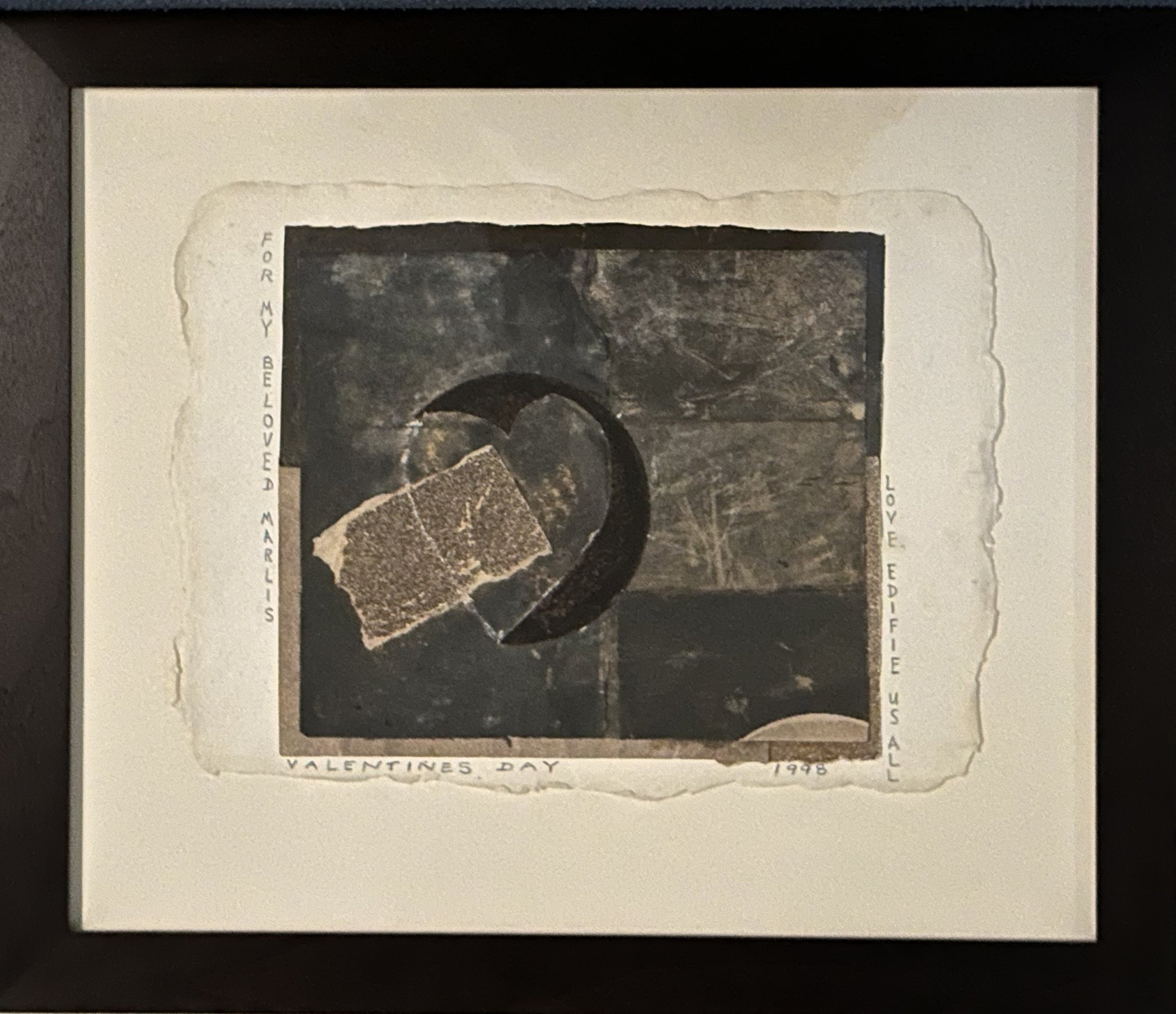
My father gave me a valentine in 1998 that is framed in my home — and shown at the top of this post. It made me feel so loved. He also presented to me one year for Christmas 3 perfectly round stones he had found in a river. They had been smoothed by the water over time and, stacked on top of each other, reminded me of a piece of Andy Goldsworthy’s work. He had found those and thought of me.
There are many more. The last one I’ll mention is a single black pearl on a gold chain that came from the best family vacation we ever took — to Bora Bora. The pearl came from a small island store where a 1200 pound pig named Bacon lounged as customers came and went, occasionally grunting loudly enough such that the proprietor had to take a break from business to go hose Bacon down with cool refreshing water.
All of these gifts said: I see you. I think about you. I put myself into this.
Questions Worth Sitting With
Before you buy that big-ticket item or grab something convenient, here are some questions worth asking:
Does this support the recipient’s growth and development without compromising the relationship? That car might offer freedom, but what is it replacing? Time together? Presence?
Does this gift connect to a specific interest of its recipient?
Do you have a particular wish for them that you can express through this gift? Can you articulate how you hope this enhances their life?
How, with this gift, can you share with its recipient, the time and energy you spent thinking about them?
Making Gifting More Meaningful
You don’t need to reinvent gifting entirely. You just need to slow down enough to connect it with intention.
Spend time on the card. Write about why you chose this particular gift and what you hope it brings to their life. Make it creative and fun. Or Funny.
Give gifts that come with a personal connection. Maybe you have a friend who makes beautiful prints. Or ceramics. Or you give someone a product that you yourself use and love. You’re not just giving an object — you’re connecting your recipient to another person’s craft and story.
Opt for smaller symbolic gifts. Sometimes the most powerful gifts are small things that represent something larger. A book that changed your thinking. A tool for a new hobby they mentioned. Seeds for a garden they’re planning. Small, but loaded with meaning.
Make things yourself. They don’t have to look professionally made. What matters is that you decided to create rather than purchase. That you put your hands and your time into making a gift.
For big-ticket items, make sure they genuinely contribute to the recipient’s growth and development. And also, make sure they are appropriate for the relationship.
What We’re Really Exchanging
Here’s what all of this comes down to: gifts are never just objects or checks or experiences. They’re communication. They’re expressions of how we see each other and what we value in each other.
The holidays will come with their pressures regardless. Wish lists will be shared. Occasions will arise. Expectations will exist.
The difference isn’t in how much we spend. It’s in how much of ourselves we put into the exchange. The stories we tell. The thoughts we share. The meaning we make explicit.
Because that’s what people remember.
What makes a gift meaningful to you? What’s a gift you’ve received — or given — that transcended the object itself? We’d love to hear your stories.