Home for the Holidaze: Finding Joy (Yes, Really) When Family Gathers
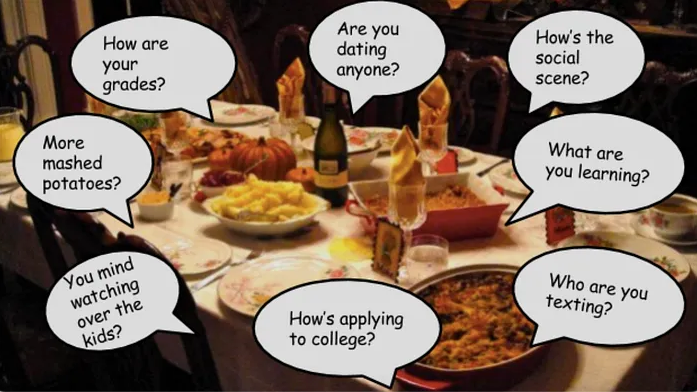
The holidays are coming, and if you’re feeling a little (or big) knot in your stomach about that upcoming family gathering, you’re not alone. There’s something about sitting around a table with the people who’ve known us longest that can bring out… well, let’s just say it can get complicated.
Even when we love each other deeply, we don’t always like each other. And that’s okay. It doesn’t make you a bad person. But you’re not stuck with things as they are — you don’t need to be a victim of your family dynamics. You can make things better.
We hope that the strategies in this post will help you not only enjoy the holidays more, but potentially transform those challenging relationships into something warmer and more genuine.
Money Makes Everything Louder
When a family or some members of a family have significant financial wealth, money acts like an amplifier for whatever’s already there. The good stuff gets better, sure, but the challenging dynamics? Those get bigger too.
Financial independence gives us a particular kind of freedom: we can avoid each other. We don’t have to show up. We don’t have to work things out. And while that might feel like a relief in the moment, it can keep us stuck in old patterns.
When we rarely see or interact with certain family members, it becomes surprisingly easy to cast them as the villain in our story. They’re “happening to us.” It’s all their fault. We’re just innocent victims of their difficult personality, their choices, their whatever-it-is that bothers us.
But here’s what’s both challenging and hopeful: we have more power than we think. We can intentionally shift family dynamics. We can come out of these gatherings not just okay, but actually closer.
This isn’t a “breathe deep and keep a gratitude journal” kind of post. (Though honestly, breathing deep never hurts.) We’re going to dig into what’s actually creating the tension around that holiday table — and then give you some practical tools to shift it.
What’s Really Happening Around That Table?
Let’s name some of the dynamics that can make holiday gatherings feel like navigating a minefield:
Old patterns die hard. That sibling rivalry from childhood? It didn’t magically disappear when you turned 40. The sense that Mom always loved your brother best, or that Dad was harder on you than your sister? Those feelings can come flooding back the moment you walk through the door, even if everyone’s now grown with kids of their own.
The success Olympics. Families are constantly assessing each other, mentally tallying who’s “winning” at life. But everyone’s playing a different game with different rules. Your sister might measure success by her thriving career. Your brother might measure it by his close-knit family. You might measure it by the adventures you’ve had or the peace you’ve found.
Mixing up worth with achievement. Too often, we confuse someone’s human dignity — their inherent value as a person — with the value they create through work and other life choices. But your worth isn’t your accomplishments. Your cousin who stayed single and childless isn’t less valuable because of those choices. Your sibling who struggled in their career doesn’t deserve any less love or respect.
Being strangers who share DNA. If you haven’t spent meaningful time with certain family members recently, you might feel like you don’t know them anymore. People change. The person you’re annoyed at might not even be the person sitting across from you — you might be projecting.
Making It Actually Work
So what do we do with all this? How do we walk into a potentially tense gathering and come out feeling relaxed and happy you were there?
Decide you’re going to have a good time. This might sound too simple, but it’s surprisingly powerful. You control 50% of every relationship, as researcher Carol Dweck reminds us. You can’t control whether your uncle makes that annoying comment again. But you can control how you show up, what energy you bring, and how you respond.
Make this decision before you arrive. Tell yourself: “I’m going to enjoy this gathering.” Not in a fake, toxic positivity way, but as a genuine intention. You’re giving yourself permission to have a good time, regardless of what anyone else does.
Come prepared with conversation starters. Think ahead about a topic you could invite the family to discuss — something interesting, inclusive, and not polarizing. Maybe it’s “What’s something you’re looking forward to next year?” or “What’s the best thing you read or watched recently?” or “Tell us about a person who influenced you this year.”
The key is staying away from politics or any topic where you know there’s been family conflict. You’re not avoiding real conversation — you’re creating space for connection instead of collision.
Become a curious explorer. Challenge yourself to learn something new about every person at the table. Yes, even Uncle Frank who you think you know everything about (and not all of it good).
Use open-ended questions: “What’s that like?” “How did that come about?” “What’s been surprising about that experience?” These questions invite people to share more than yes-or-no answers.
And lastly, avoid “you statements” that can sound like judgments. Instead of “You always do X,” try “I’m curious about Y.” Instead of “You should,” try “What do you think about…?”
The Gift of Allowing Difference
At the heart of all this is a profound shift: learning to not judge people just because they are different from us.
Your family members don’t have to share your values, your politics, your life choices, or your definition of success for you to have a meaningful connection with them. They don’t have to change who they are for you to enjoy being around them.
This doesn’t mean accepting harmful behavior or tolerating abuse. It means recognizing that difference doesn’t equal wrongness. Your brother’s ambitious life isn’t a commentary on your quieter one. Your sister’s traditional choices aren’t a rejection of your unconventional ones.
When we stop needing people to be like us, something remarkable happens: we can actually see them. And often, they can finally see us too.
Moving Forward
The holidays will still be imperfect. Someone might say something annoying. The turkey might be dry. Your mom might ask yet again when you’re planning to [insert whatever she thinks you should do].
But you have more agency than you might think. You can choose curiosity over judgment. You can choose connection over being right. You can choose to show up as the person you want to be, regardless of who anyone else chooses to be.
And who knows? You might actually enjoy yourself. You might learn something surprising. You might have a surprising moment of connection — or more than one.
That’s not just surviving the holidays. That’s transforming them.
So as you head into this season, remember: you’re not a victim of your family dynamics. You’re an active participant with the power to shift them.
We’re rooting for you. And we’ll be right there with you, taking our own advice and trying to make this holiday season not just bearable, but genuinely fun and joyful.
Here’s to coming home — and maybe, just maybe, enjoying it.